
Home
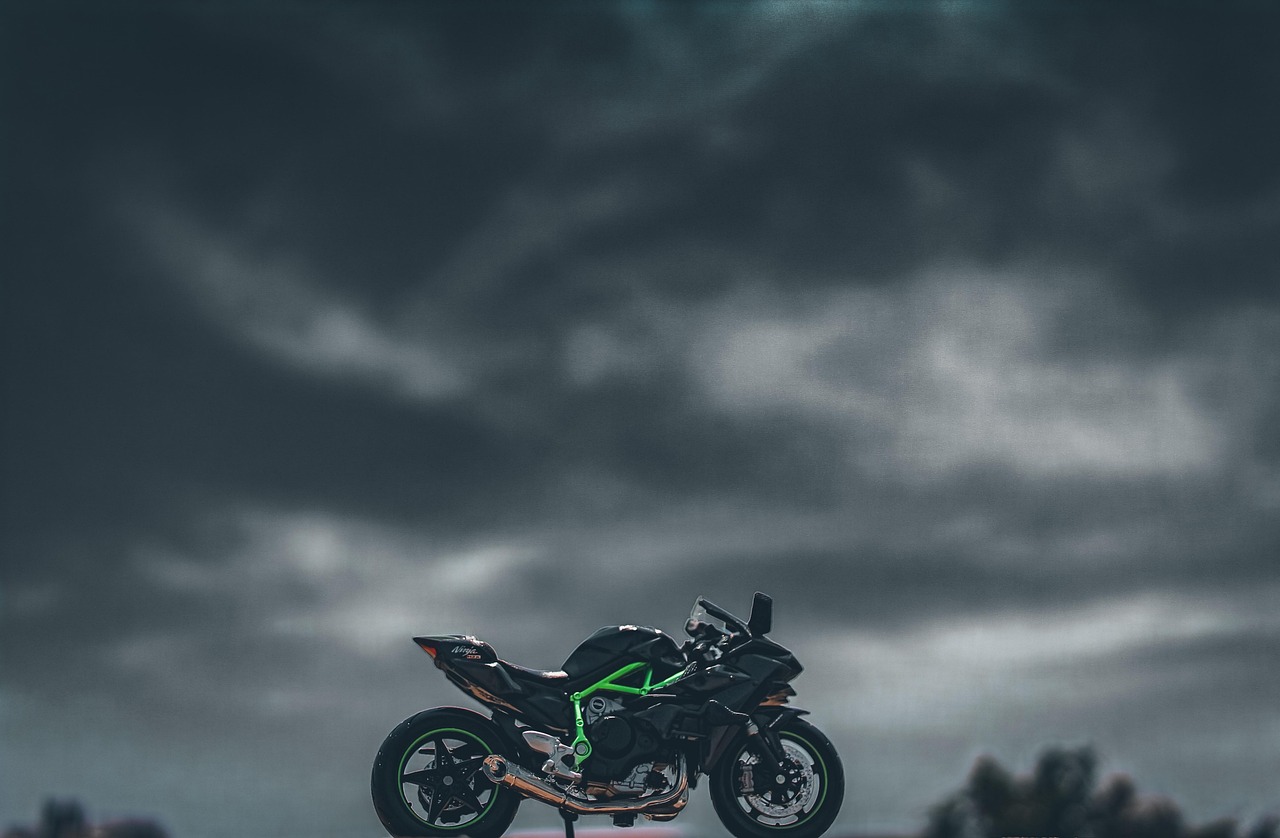
Kawasaki is life - Kawasaki is love!
- Details
- Written by: Di
- Category: Blog
- Hits: 33
Absolutely! Kawasaki is one of the most renowned Japanese motorcycle manufacturers, known for producing high-performance bikes across multiple categories. Here’s a detailed breakdown:
1. History & Background
-
Founded: 1896 (as Kawasaki Heavy Industries), motorcycles from 1960s.
-
Headquarters: Japan
-
Specialty: Sportbikes, cruisers, off-road bikes, and high-performance supercharged machines.
-
Reputation: Fast, reliable, and innovative. Kawasaki is famous for pushing limits, especially in the sportbike segment.
2. Popular Kawasaki Motorcycle Categories
a) Sportbikes
High-performance bikes designed for speed, handling, and track capability.
-
Ninja Series: Legendary sportbike line.
-
Ninja H2 / H2R: Supercharged, extreme power, mostly track-oriented (H2R is track-only).
-
Ninja ZX-10R / ZX-6R: Superbikes with racing pedigree, often used in World Superbike competitions.
-
Ninja 400 / 650: Middleweight sportbikes suitable for street riding and beginners-to-intermediate riders.
-
b) Naked / Streetfighters
-
Z Series: Exposed, aggressive-looking bikes with sporty performance.
-
Z900, Z650, Z400: Smooth, versatile, good for city riding and weekend trips.
-
Z1000: Powerful naked bike with strong acceleration and performance.
-
c) Cruisers
-
Vulcan Series: Classic cruiser style, comfortable for long rides.
-
Vulcan S: Adjustable ergonomics for different rider sizes, beginner-friendly.
-
d) Adventure / Touring
-
Versys Series: Sport-touring and adventure-oriented motorcycles.
-
Versys 650 / 1000: Comfortable for long-distance touring with upright riding position.
-
e) Off-Road / Motocross
-
KX Series: Lightweight, high-performance dirt bikes.
-
KX250 / KX450: Designed for motocross racing.
-
-
KLX Series: Trail and dual-sport bikes suitable for beginners and casual riders.
3. Technology Highlights
-
Supercharged Engines: Exclusive to H2/H2R for extreme performance.
-
ABS & Traction Control: Modern electronics for safety and performance.
-
Slipper Clutch: Found in sportbikes for smoother downshifts.
-
Kawasaki Cornering Management Function: Advanced electronics for handling in turns.
4. Strengths
-
Powerful engines and fast acceleration.
-
Strong motorsport heritage.
-
Wide range from beginner bikes to extreme sport models.
-
Innovative engineering, e.g., superchargers and electronics packages.
5. Weaknesses / Considerations
-
Some high-performance models can be expensive and maintenance-intensive.
-
Sportbikes may be uncomfortable for casual or long-distance riders.
-
Dealer network and parts availability vary by region.
If you want, I can also make a table with Kawasaki’s main models, engine types, top speed, and best use case, so you have a quick reference. This helps if you’re comparing bikes for purchase or just for general knowledge.
Parts
- Details
- Written by: Di
- Category: Blog
- Hits: 35
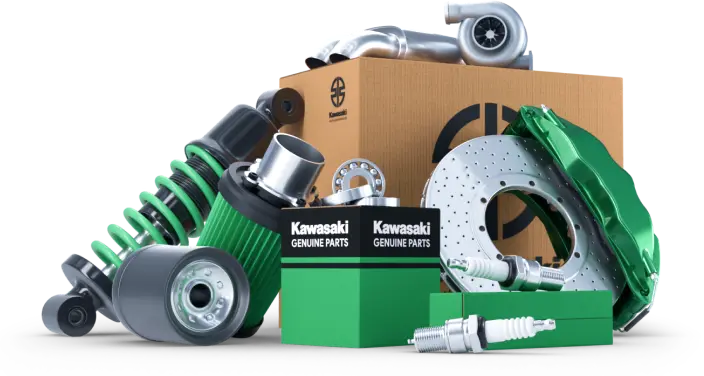
Let’s break down Kawasaki motorcycles by their main parts and components, focusing on both function and typical Kawasaki design choices. I’ll cover engine, transmission, chassis, suspension, brakes, electronics, and bodywork.
1. Engine
The heart of any Kawasaki motorcycle.
-
Types: Inline-4, parallel-twin, single-cylinder, supercharged (H2/H2R).
-
Materials: Aluminum alloy for light weight and cooling efficiency.
-
Features:
-
Liquid-cooled for high-performance models.
-
DOHC (Double Overhead Camshaft) for high RPM efficiency.
-
Fuel injection for precise power delivery.
-
H2/H2R has a supercharger for extreme power (up to 310 hp on H2R!).
-
2. Transmission & Drivetrain
-
Gearbox: Typically 6-speed manual.
-
Clutch: Wet multi-plate; many sportbikes have a slipper clutch for smoother downshifts.
-
Final Drive: Chain drive (most sport/naked bikes), shaft drive (some cruisers, like Vulcan series).
3. Chassis & Frame
-
Types of Frames:
-
Aluminum twin-spar (sportbikes, Ninja series) for light weight and rigidity.
-
Steel backbone or tubular frames (cruisers, some naked bikes) for comfort and durability.
-
-
Role: Provides stability at high speeds, cornering precision, and rider safety.
4. Suspension
-
Front: Telescopic forks or inverted forks (USD forks) for sport models.
-
Rear: Mono-shock with adjustable preload/damping for most models.
-
Special Tech: Some models, like ZX-10R or H2, have electronically adjustable suspension for track vs street riding.
5. Brakes
-
Front: Typically dual disc with radial calipers on sportbikes.
-
Rear: Single disc.
-
ABS: Standard on most modern Kawasaki motorcycles.
-
High-end Models: Brembo calipers and lightweight rotors for maximum stopping power.
6. Electronics & Safety
-
Traction Control: Adjustable for different road conditions.
-
Power Modes: Sport, Road, Rain, etc., for engine responsiveness.
-
Quick Shifter: On sport models for clutchless upshifts.
-
Kawasaki Cornering Management Function (KCMF): Helps stability in corners.
-
Dashboard: TFT displays with speedometer, tachometer, gear indicator, fuel, and ride mode info.
7. Bodywork & Ergonomics
-
Fairings: Full or partial (sportbikes have full aerodynamic fairings, naked bikes minimal).
-
Seat: Sporty vs comfortable (adjustable on some models).
-
Fuel Tank: Designed for aerodynamics and rider control.
-
Lighting: LED headlights and taillights on most modern bikes.
8. Wheels & Tires
-
Sportbikes: Lightweight alloy wheels, high-grip radial tires.
-
Adventure/Off-road: Spoked wheels for durability, dual-sport tires.
-
Cruisers: Wider rear tires for stability.
Summary
Kawasaki motorcycles combine performance-focused parts (engine, brakes, suspension) with advanced electronics for safety and ride customization. High-end models (H2/H2R, ZX-10R) have race-grade components, while mid-range bikes (Ninja 400, Z650) use durable, cost-efficient parts that are still sporty.
If you want, I can make a diagram of a Kawasaki motorcycle labeling all major parts, so it’s easier to visualize everything at a glance.
About our bikes
- Details
- Written by: Di
- Category: Blog
- Hits: 35
What is Kawasaki?
1. The Corporation
-
Kawasaki Heavy Industries, Ltd. (KHI) is a major Japanese multidisciplinary corporation founded in 1896.
-
Its activities include shipbuilding, heavy machinery, energy systems, railway transport, aviation, and even rockets.
-
In October 2021, the motorcycle division was separated into an independent company called Kawasaki Motors, Ltd.
2. History
-
The founder, Shōzō Kawasaki, opened a shipyard in 1878.
-
Initially, the company focused on shipbuilding and industrial machinery.
-
Kawasaki entered the motorcycle business after World War II, producing its first motorcycle engines in 1953.
-
In 2023, the company celebrated 70 years in the motorcycle industry.
3. Products
Kawasaki manufactures a large variety of vehicles and machines:
-
Motorcycles: sport bikes (Ninja series), street/naked models (Z series), retro machines (W series), off-road, enduro, and more.
-
ATVs and Utility Vehicles: quad bikes and side-by-side vehicles (like the MULE series).
-
Jet Skis: Kawasaki’s personal watercraft brand (Jet Ski).
-
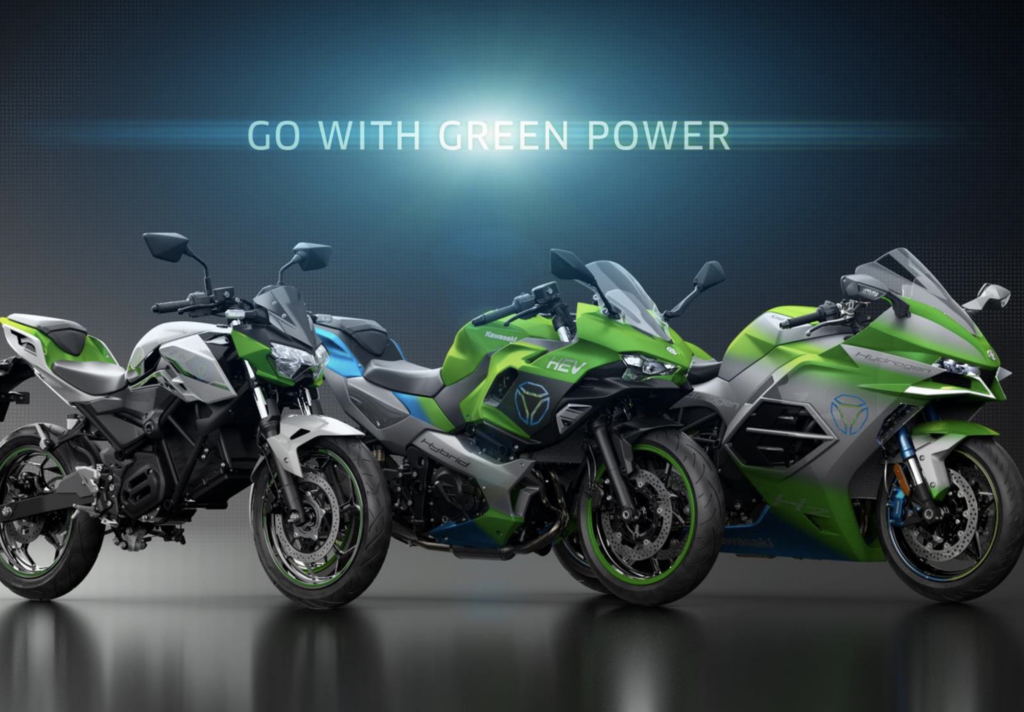
Electric motorcycles: The Kawasaki e-1 line includes the Z e-1 and Ninja e-1 electric models.
-
The larger corporation also produces industrial machinery, hydraulic systems, transportation systems, and more.
4. Motorcycle Legends
Some iconic Kawasaki motorcycles include:
-
Kawasaki Z1000 — one of the most popular street/naked bikes.
-
Kawasaki W650 — a retro-styled motorcycle inspired by classic British designs.
-
Kawasaki KR250 / KR350 — racing motorcycles used in Grand Prix competitions.
5. Brand Philosophy
-
Kawasaki’s slogan is “Let the Good Times Roll”, emphasizing the joy and excitement of riding.
-
The logo of Kawasaki Motors, Ltd. uses a stylized version of the Japanese character “kawa” (river), tying back to the company’s origins in shipbuilding.
-
Kawasaki focuses heavily on technological innovation and sustainability, especially with its new electric models.